

By PTA Boedels – Estate Administration Experts
Losing a loved one is never easy, and managing their estate can often feel overwhelming. For many families in Pretoria, understanding the process of estate administration is crucial to ensure that the deceased person’s wishes are honoured, taxes are paid, and assets are distributed properly. At PTA Boedels, we specialise in helping families navigate deceased estates, providing comprehensive estate administration services in Pretoria without the need for direct legal representation.
In this article, we share the estate administration checklist that professionals use to finalise an estate. This checklist will help you understand what steps are involved when winding up an estate and how a professional deceased estate administrator can assist.
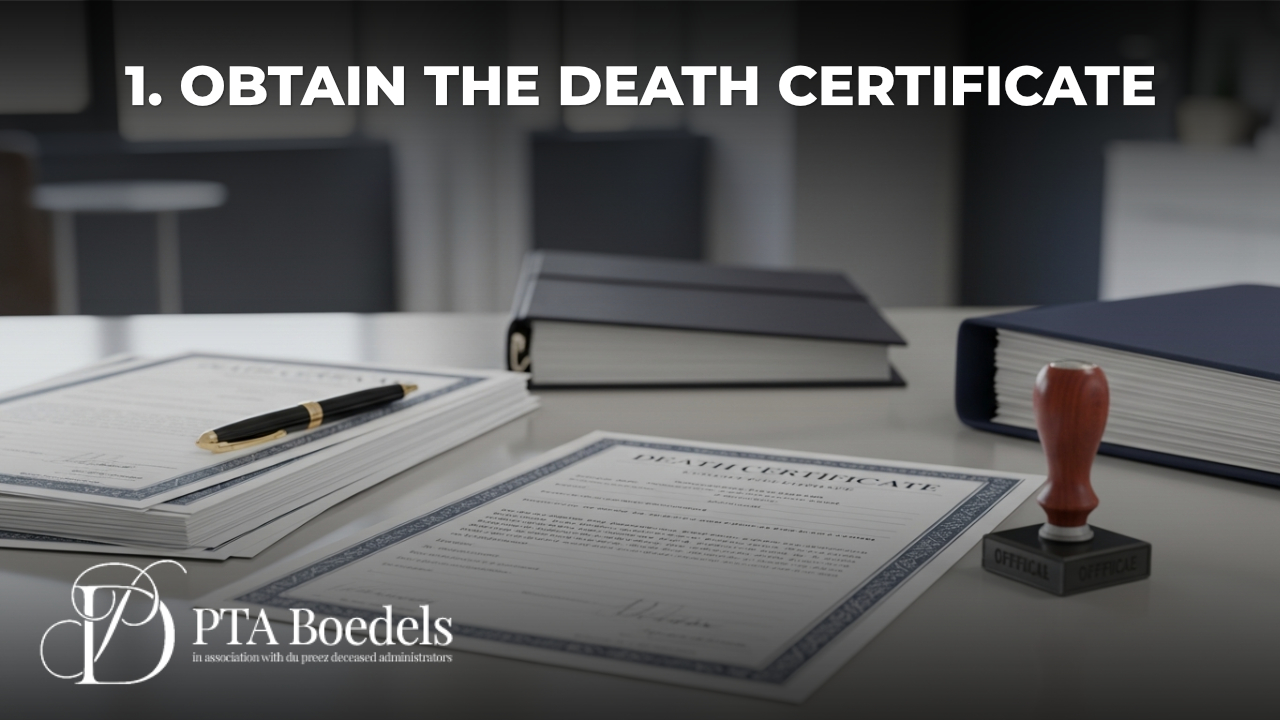
1. Obtain the Death Certificate
1. Obtain the Death Certificate
The first step in estate administration is to secure the death certificate of the deceased person. This official document is required by the Master’s Office and other institutions to start the process of reporting the estate. Multiple copies are usually necessary, as banks, SARS, and insurance companies will each request one for their records.
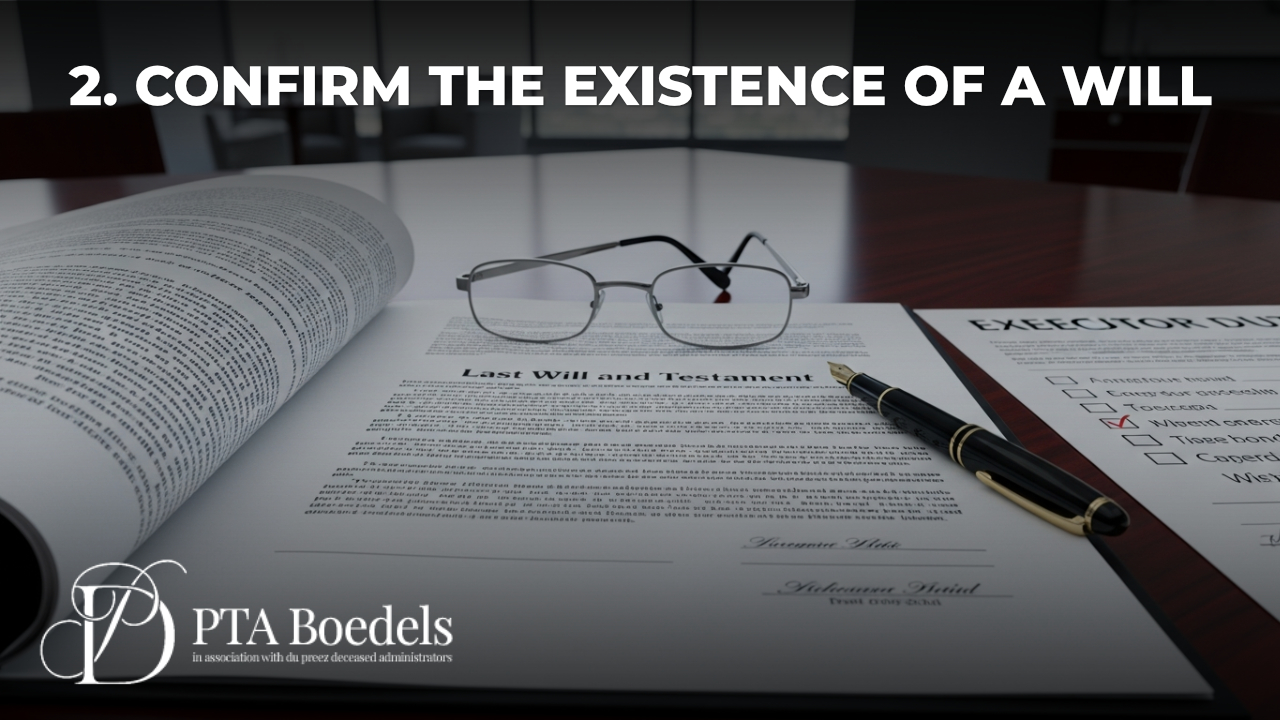
2. Confirm the Existence of a Will
2. Confirm the Existence of a Will
Before proceeding, it is essential to determine whether the deceased person left a last will or living will. A legal will provides clarity on who inherits the estate and helps avoid disputes. If no will exists, the estate will be dealt with according to South African succession law, which governs inheritance rights for heirs, including minor heirs.
Even if a will exists, it’s important to have it reviewed by a professional administrator to ensure that all executor duties are properly understood and carried out.
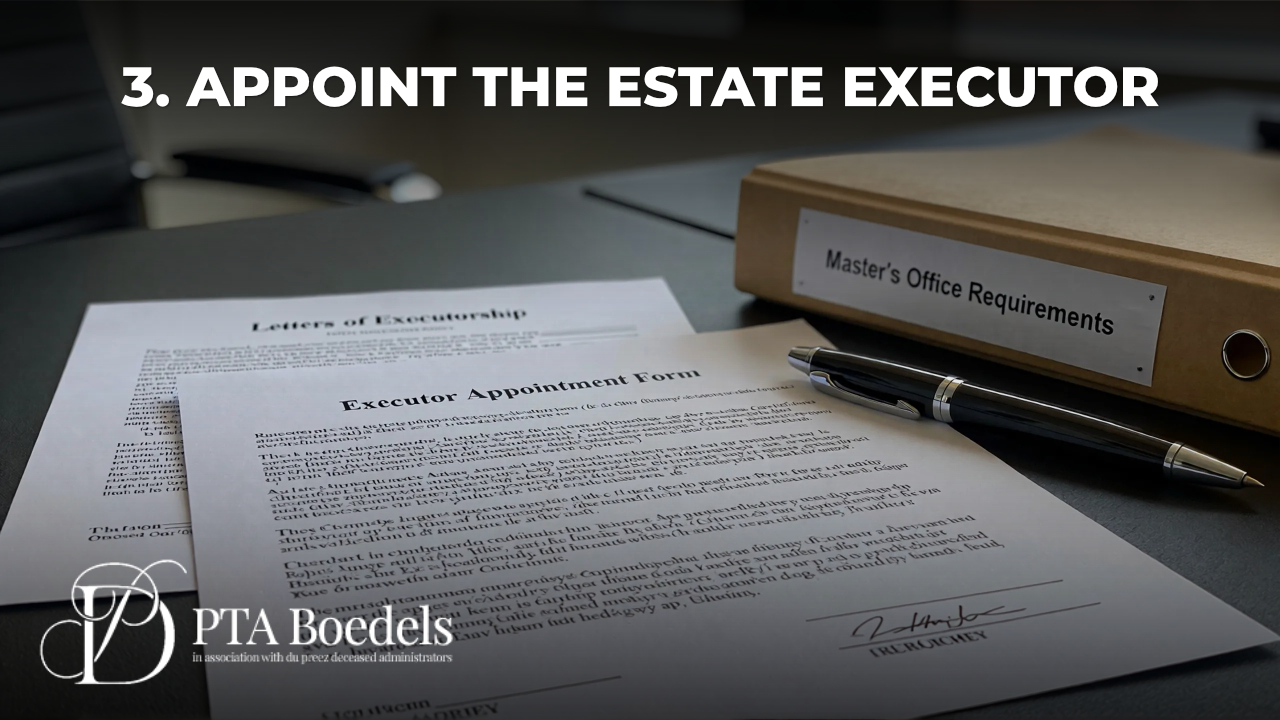
3. Appoint the Estate Executor
3. Appoint the Estate Executor
The estate executor is responsible for managing and finalising the estate. If the deceased left a will, it usually names an executor; otherwise, the Master may appoint one. Executors must often obtain an executor bond as a safeguard and must be aware of their executor duties, including reporting the estate to the Master and submitting all necessary documentation.
At PTA Boedels, we assist families by guiding executors through these responsibilities, ensuring that the estate is managed efficiently and in compliance with the Master’s Office requirements.

4. Collect Estate Assets and Liabilities
4. Collect Estate Assets and Liabilities
Once appointed, the executor must compile a comprehensive list of the deceased person’s estate assets and estate liabilities. This includes:
- Bank accounts
- Investment portfolios and trust funds
- Property and real estate
- Personal belongings
- Outstanding debts, loans, or mortgages
This step is critical for calculating estate duty and understanding the total value of the estate to finalise estate matters.
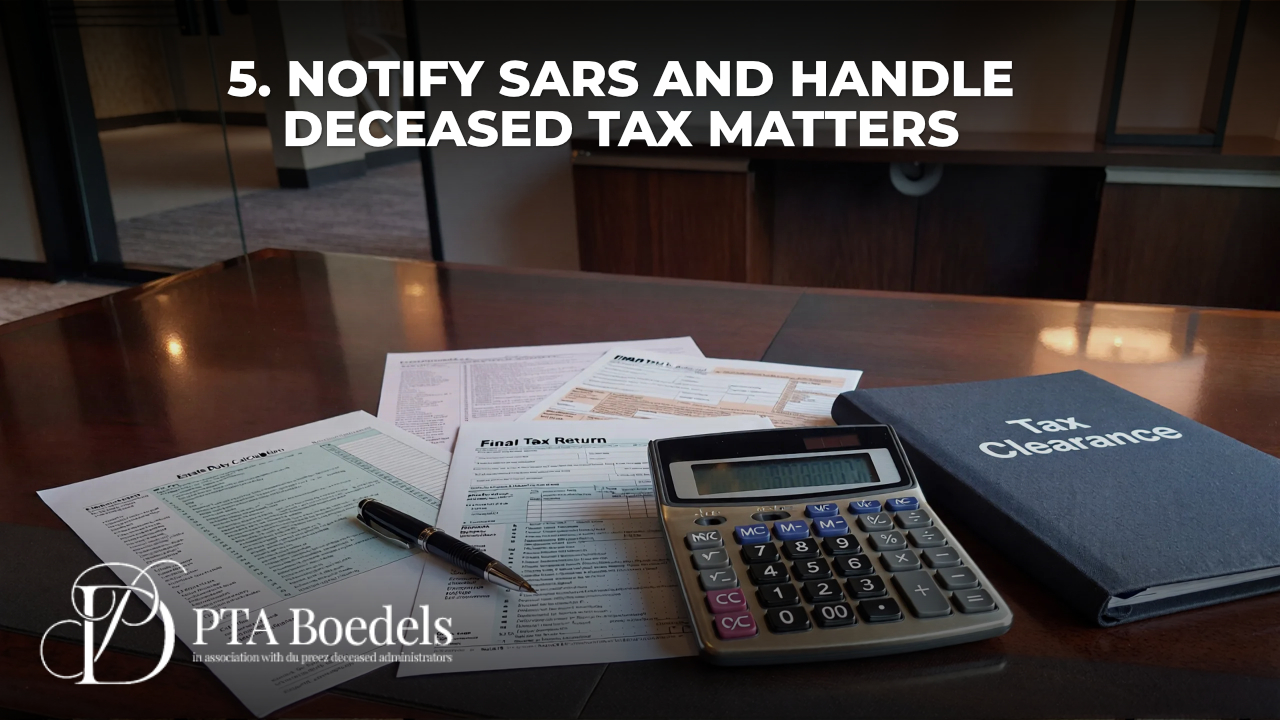
5. Notify SARS and Handle Deceased Tax Matters
Every estate must be reported to SARS estate for the calculation and payment of deceased tax and inheritance tax obligations. Executors must submit the deceased person’s final tax returns and obtain a tax clearance certificate before assets can be distributed.
Proper tax management ensures compliance with South African inheritance law and protects heirs from unexpected liabilities.
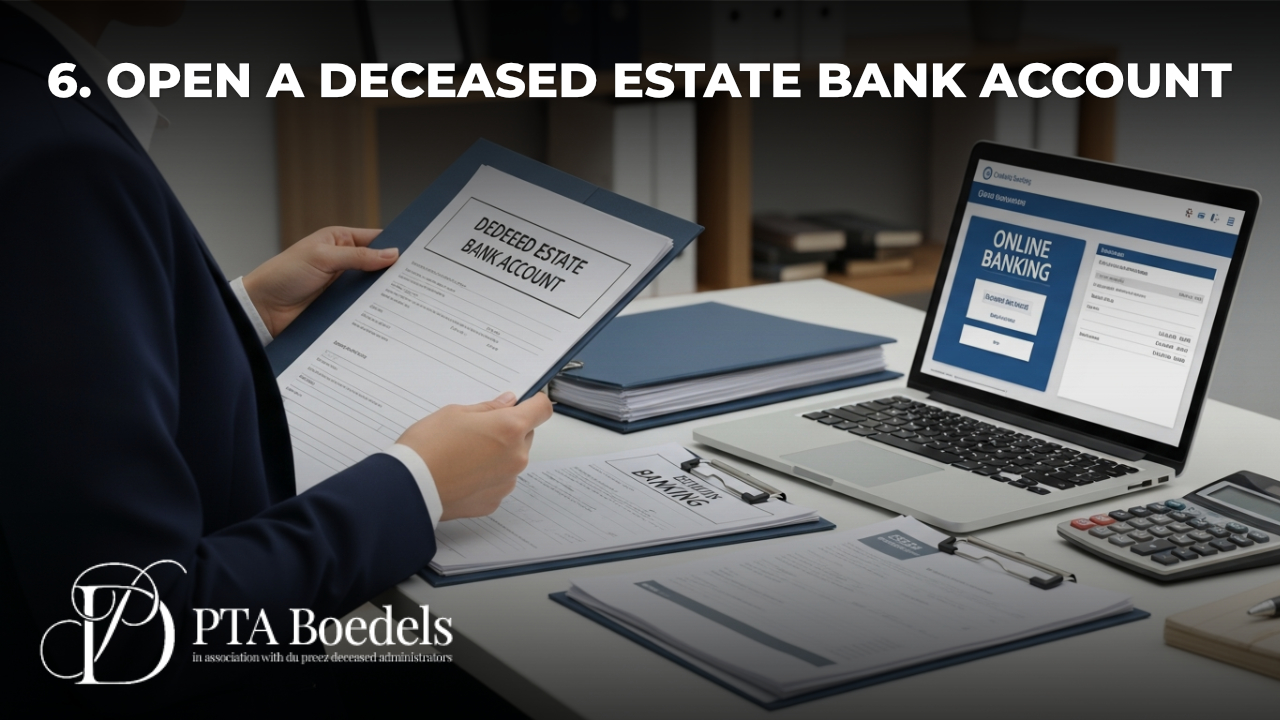
6. Open a Deceased Estate Bank Account
A separate bank account should be opened in the name of the estate. This account is used to:
- Receive payments owed to the estate
- Pay outstanding debts and estate liabilities
- Manage executor fees and other administrative costs
Keeping estate finances separate from personal accounts ensures transparency and accountability during the estate winding-up process.
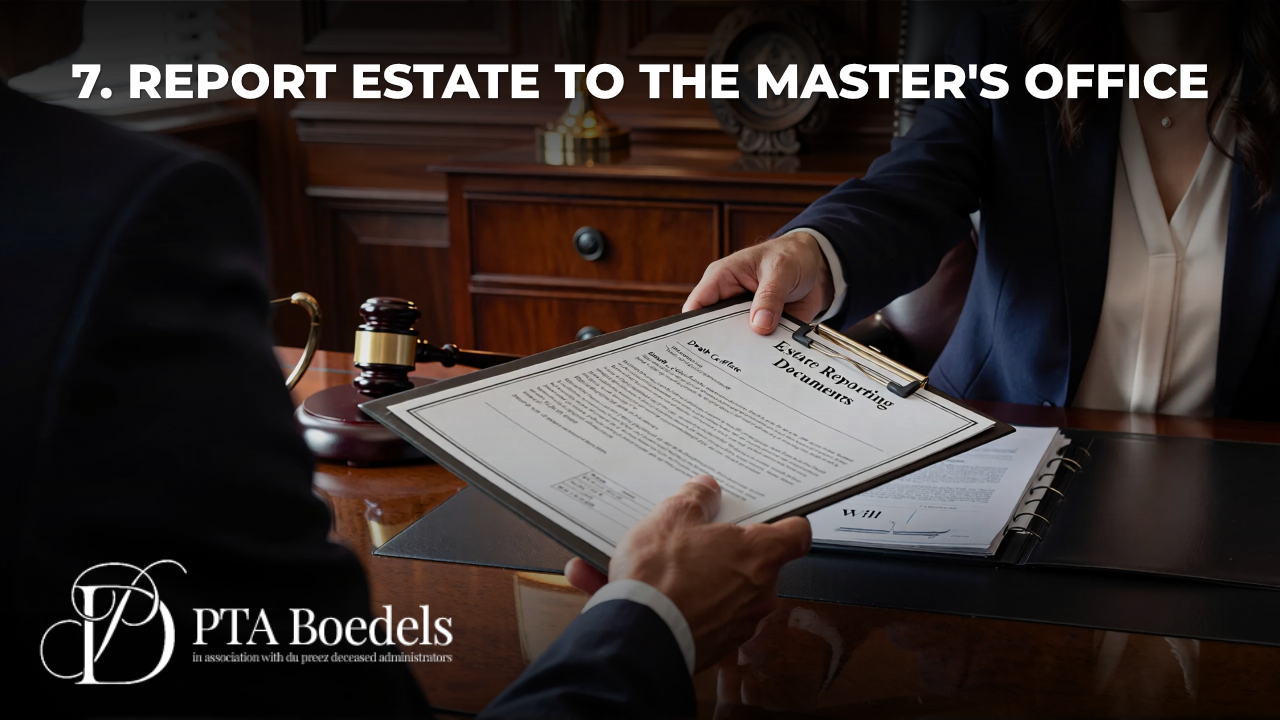
7. Report Estate to the Master’s Office
Reporting the estate is a crucial step in estate administration. The executor must submit the estate inventory, the death certificate, the will (if available), and relevant supporting documents to the Master’s Office. The Master’s Office will review the documents and issue letters of executorship, allowing the executor to legally manage and distribute the estate.
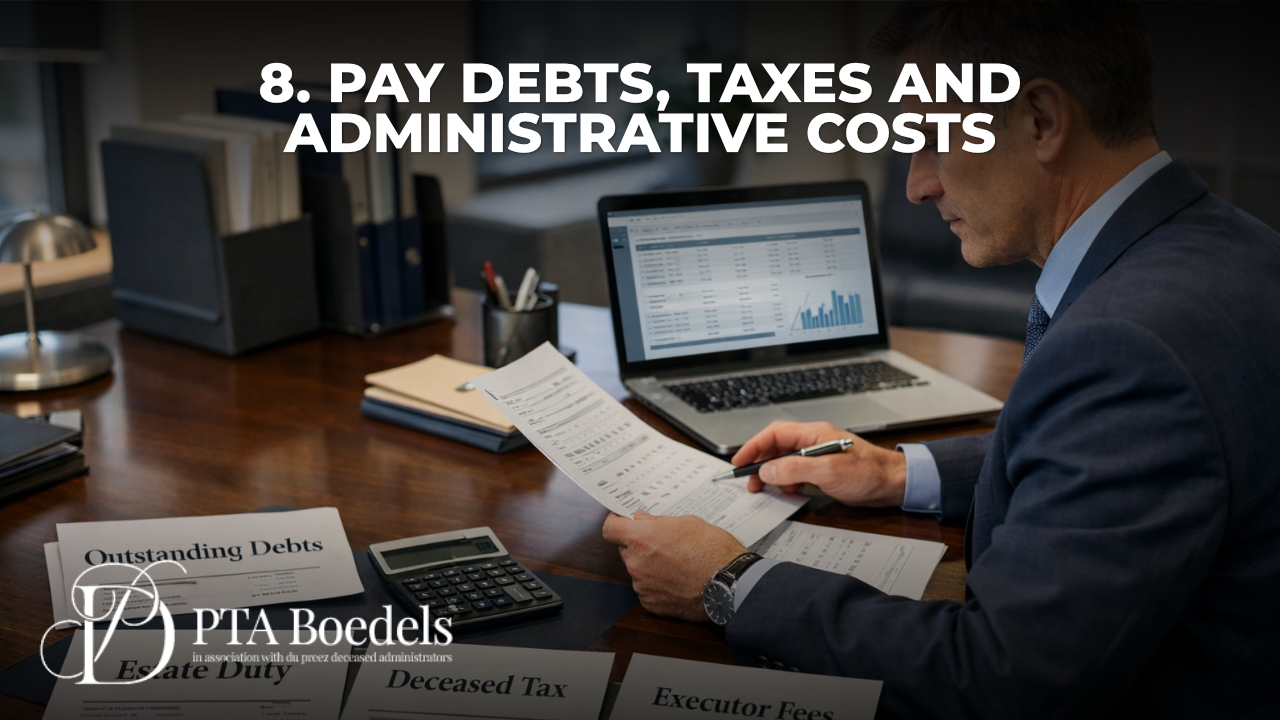
8. Pay Debts, Taxes, and Administrative Costs
Before distributing assets to beneficiaries, all debts, taxes, and administrative expenses must be settled. This includes:
- Outstanding utility bills, loans, or mortgages
- Estate duty and deceased tax obligations
- Professional fees, including executor fees
Addressing these obligations protects the estate from legal disputes and ensures a smooth winding up estate process.

9. Distribute the Estate to Beneficiaries
Once all obligations are met, the executor can begin distributing assets to heirs according to the will or, if no will exists, in line with succession law. This includes cash, property, and interests in family trusts or testamentary trusts.
Professional guidance ensures that:
- Beneficiaries understand their inheritance rights
- Minor heirs are properly represented
- Any potential estate disputes are minimised
10. Update and Review Estate Documents
Finally, it’s important to encourage surviving family members to update wills and review their estate planning documents. This may include:
- Drafting a new legal will or living will
- Creating or updating inter vivos trusts
- Reviewing trust services and family trusts
Keeping these documents current ensures that future estates are easier to administer and that heirs are adequately protected.
Why Use a Professional Deceased Estate Administrator in Pretoria?
While PTA Boedels are not lawyers, our experienced team provides expert support in managing deceased estates. We help families finalise estates efficiently, offering guidance on:
- Preparing and reporting the estate to the Master’s Office
- Calculating estate duties and managing executor fees
- Distributing assets and settling estate liabilities
- Handling administrative tasks so executors can focus on supporting their family
By following a professional estate checklist, families in Pretoria can navigate the complexities of estate administration with confidence and peace of mind.
Conclusion
Managing a deceased estate involves numerous steps, from obtaining the death certificate to distributing assets to beneficiaries. Using an estate administration checklist like the one professionals rely on ensures that nothing is overlooked and that the estate is wound up efficiently.
At PTA Boedels, we provide comprehensive deceased estate administration services in Pretoria, guiding families through each stage and ensuring that both legal obligations and family wishes are respected. Whether you need help with wills, trusts, or finalising a deceased estate, our team is here to provide clarity, support, and peace of mind.
📍 Looking for experienced guidance and personal support? Contact us today for reliable estate and trust solutions.
PTA Boedels – The Personal Support You Need During Life’s Toughest Transitions